Opinion & AnalysisAnalysisIran-US DEADLOCK
Iran Seeks Strategic Advantage Ahead of November 4 Amid Rising Pressure on Trump
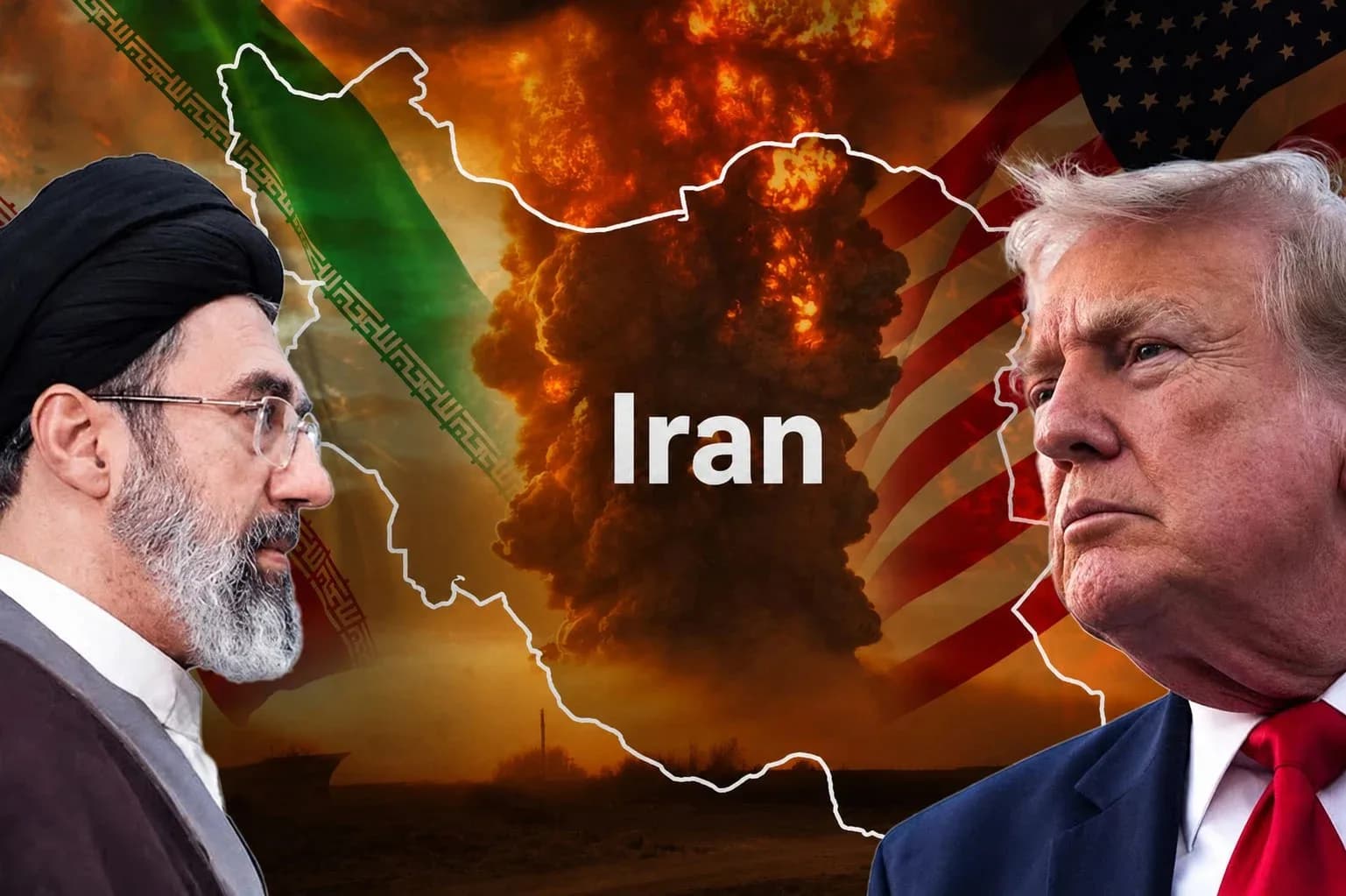
Iran–US Deadlock: The Search for a Position of Strength
While social media is buzzing with opinions on inconsequential “body language,” analysing the broader Iran–US deadlock can be difficult but very interesting. Overall, a diplomatic breakthrough remains distant, while the chances of widespread regional conflict are increasing by the day.
Many commentators are of the view that Iran is playing hardball. Popular assessments point to Iran’s ungratefulness towards mediators and its miscalculations regarding the combined US–Israel potential. Many analysts also consider Iran’s tough, aggressive, and uncompromising stance risky or flawed. Elsewhere, Iran’s posture is attributed to the religiously motivated guidance of the clergy and the extremist mindset of the IRGC. Perhaps most of these assessments are somewhat off the mark.
Iranian political-military leadership is playing a calculated game while leveraging its national resilience, invisible support from dominant global actors, and decisive military performance. As on the battlefield, in diplomacy, too, one can manoeuvre only when there is space available.
For Iran, the failures of its opponents and its own achievements, according to its reckoning, do provide essential space. How accurate this Iranian assessment is will only be proven with time. However, as of today, Iranian leadership assumes it has sufficient room to manoeuvre, particularly until 4 November, and is therefore pursuing a position of strength to negotiate a deal on its own terms.
On the other side, the US, having tried most of the military options available alongside unprecedented diplomatic and economic coercion, also continues to seek a position of strength. As often happens, the pursuit of such a position after a military conflict proves ruthless and unending. Caught in the middle, the international community is facing the negative fallout of the recklessness of both sides.
Is there still room for further manoeuvring by Iranian leadership? What could be its assessment of an end to this pursuit? These are million-dollar questions.
In my opinion, a few geopolitical outcomes of the February 2026 conflict have strengthened Iran’s assessment of its room to manoeuvre. A few important ones are outlined below.
1. Political and Diplomatic Costs for the US and Israel
First, Iranian leadership understands precisely that illegal and blatant military aggression against Iran has seriously damaged Trump politically and, at the same time, has led to Israel’s international isolation.
While Trump is feeling the heat in the run-up to 4 November in terms of a huge loss of political capital, Israel, in the medium to long term, will have to face serious geopolitical ramifications.
The victim narrative that Israel propagated so successfully for decades is no longer as popular around the world. Iran can clearly see a window of opportunity until 4 November because of the US and Israel’s inability to initiate another cycle of violence through military action.
2. Iran’s Regional Military Capabilities
Second, regionally, Iran has demonstrated its superior military capabilities, both independently and through its combined capacity with its allies.
Iranian leadership fully understands that neither the US nor any Middle Eastern state, including its allies, can go all out against its multidirectional drone and missile targeting. Iran is confident of perpetuating its influence over the Strait of Hormuz and Bab al-Mandeb and their impact on the global economy.
Moreover, being confident of enforcing a response dilemma, as well as exposing the inadequacies of Saudi Arabia, Kuwait, Bahrain, Jordan, the UAE, and Qatar, Iran believes it enjoys freedom of action in the region. This is an assumption that will only worsen the existing fault lines in the region.
3. Constraints on US and Israeli Munitions
Third, Iranian leadership understands that any conflict following the pattern of previous two conflicts will require the availability of huge stockpiles of precision munitions in the region, both for the US and Israel.
According to popular assessments, they have consumed up to half or two-thirds of the stocks held before 25 June, which cannot be replenished even in the next three to five years. Hence, a repetition of an integrated offensive similar to the campaign designs of the last two conflicts appears impossible.
4. Strategic Intelligence and External Support
Fourth, one can assume that Iran must be heavily relying on strategic intelligence inputs from the world’s second- and third-ranked superpowers regarding an overall assessment of the joint US–Israel capacity for another kinetic round.
There could also be a tacit understanding that either of these two giants would provide a final signal indicating when Iran should partially back down on its list of demands.
Nation-states do not embark upon risky undertakings without a clearly worked-out fallback position. Moreover, such fallback positions are tabled according to precisely worked-out decision templates.
Iran’s Strategy: Negotiating from a Position of Strength
Most of the geopolitical realities outlined above do carve out space for Iran to call the US bluff and negotiate a deal on its own terms.
Iran knows that, if it does not push the US to certain limits, it will have to abandon not only its nuclear programme but also its foreign policy preferences and alliances sustained by religious sentiment, which others rightly perceive as a major cause of instability in the region.
Such concessions would shake the very foundations of the revolution. Hence, Iran is prepared to be temporarily ungrateful to mediators and risk long-term peaceful coexistence with its neighbours.
In the other camp, US options until the midterm elections are limited and depend entirely on intermediaries or future diplomatic and economic offers that the other side is not ready to accept.
What Could the Present Impasse Lead To?
What the present impasse could lead to is another very difficult question to answer. However, a few scenarios can be hypothesised.
1. Continued Diplomatic Efforts
Diplomatic efforts are likely to continue until 4 November. We might also see enhanced and more intense efforts by China and Russia, individually or collectively, over the next two weeks.
At the same time, Qatar and Pakistan will also continue to play their roles.
2. Trump’s Domestic Political Calculations
Assessing that no breakthrough is likely, Mr Trump has initiated parallel efforts to recover, at least domestically.
These efforts are focused on controlling inflation through cheaper inflows of diesel from Russia and reaching agreements on initial steps towards de-escalation between Russia and Ukraine in the coming days.
3. A Renewed US Military Campaign
Following the elections, if Trump sustains or improves his standing in both houses, he may try new military means or strategies to force Iran to accept US terms.
The employment of the announced “mother of all bombs”—short of a nuclear weapon—could involve the GBU-57 being used in larger numbers against the same impact points or against multiple targets.
Alternatively, a recently developed, more destructive conventional munition or missile could be used for decapitation strikes.
If the US pursues such an option, it would be short-lived, dangerous for the world, and catastrophic for the region.
4. A Significant Trump Electoral Defeat
If Trump loses significantly, his unpredictable style of leadership could push the region’s geopolitical dynamics in any direction.
Although such an outcome cannot be precisely assessed, it would definitely be more dangerous for Iran and every other country in the region than its negative spillover effects for Israel and the US.
The Need for Strategic Restraint
While Iran plays its carefully calculated hardball, it must crystallise the decision point for returning to its fallback position. This calculation must consider not only its missile and drone capabilities but also the long-term economic interests and well-being of the Iranian people.
In the meantime, every country in the region, along with Pakistan’s leadership, must continue efforts to prevent further deterioration of interstate relations by containing local conflicts.
What Pakistan and its partners are doing is not only in the interests of Iran, the US, and the Middle East, but also represents a great service to humanity.
Join the discussion
No comments yet. Be the first to weigh in.
Sources
- Public recordLt Gen SaeedX (Twitter)
Read next
Related coverage
Pakistan
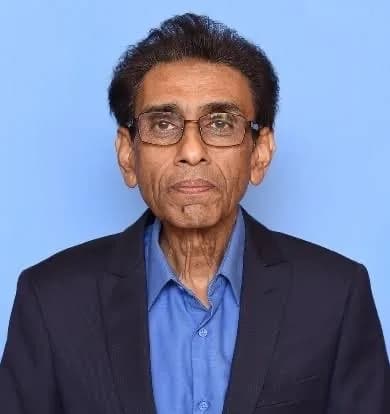
Has Khalid Maqbool Siddiqui Lost the Chairmanship of MQM-Pakistan?
Pakistan
Border Health Services Responsible for Irregularities in Vaccine Procurement, Inquiry Report Reveals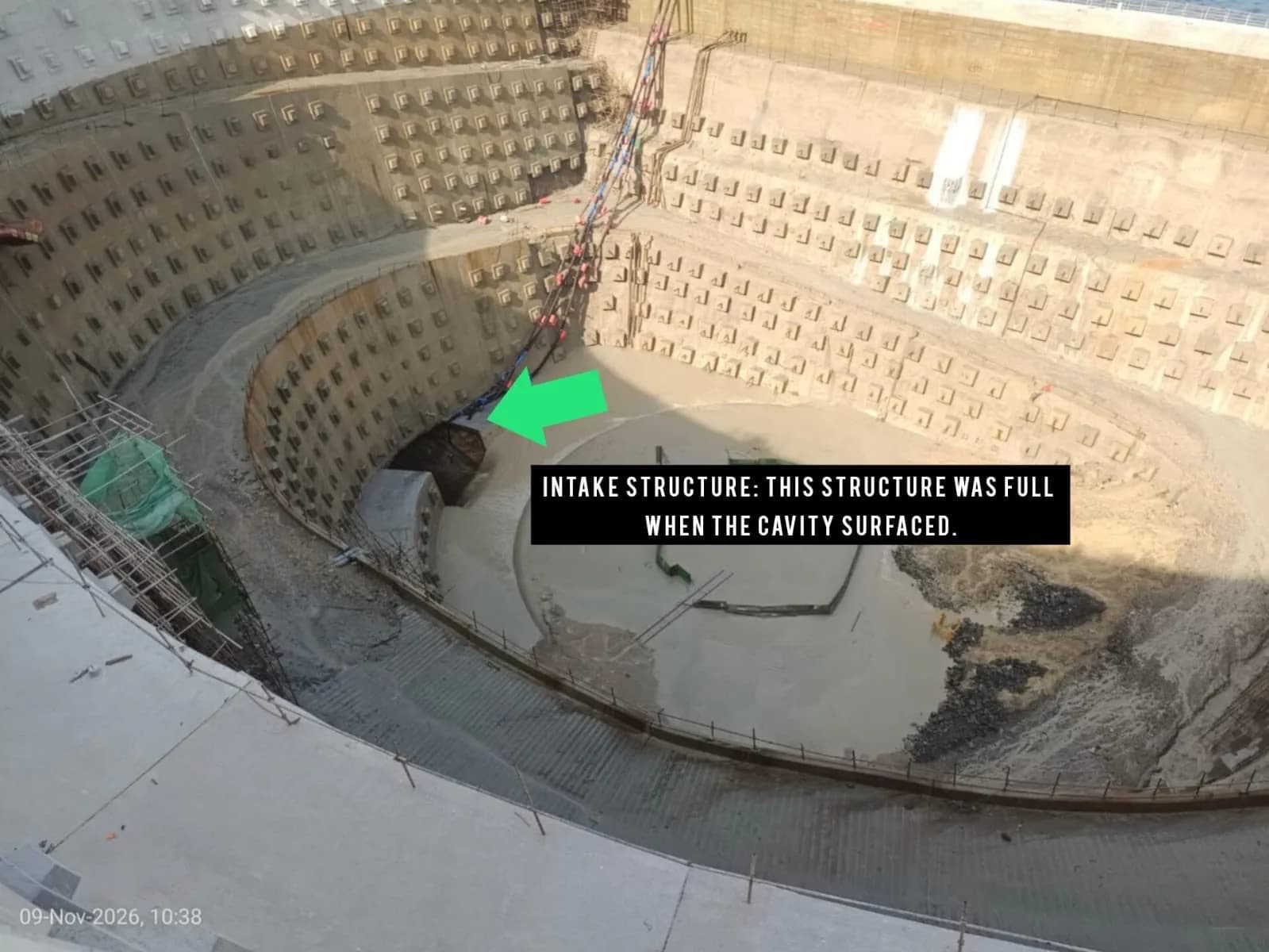
Pakistan
Water Enters Under-Construction Powerhouse at Tarbela 5th Extension Project After Tunnel Collapse
World
The US announces the establishment of a new task force, “Iron Gate,” to increase pressure on Iran.
Latest
Lifestyle & Society
The Vespa Scooter: A Ride, a Journey Through an EraPakistan
President Zardari Meets Mohsin Naqvi; New Provinces Also DiscussedPakistan
Has Khalid Maqbool Siddiqui Lost the Chairmanship of MQM-Pakistan?Business
Karachi Police Assures Traders of Full Cooperation in Ensuring Their Security and Resolving Issues: Additional IGPakistan
Senior Journalist Ammar Masood’s Analysis of Federal Health Minister Syed Mustafa Kamal’s Press Conference.
More from Opinion & Analysis