Lifestyle & SocietyTurn back, O wheel of time, turn back! 🛵
The Vespa Scooter: A Ride, a Journey Through an Era
The Vespa may have almost disappeared from Pakistani roads over time, but its charm has never faded.
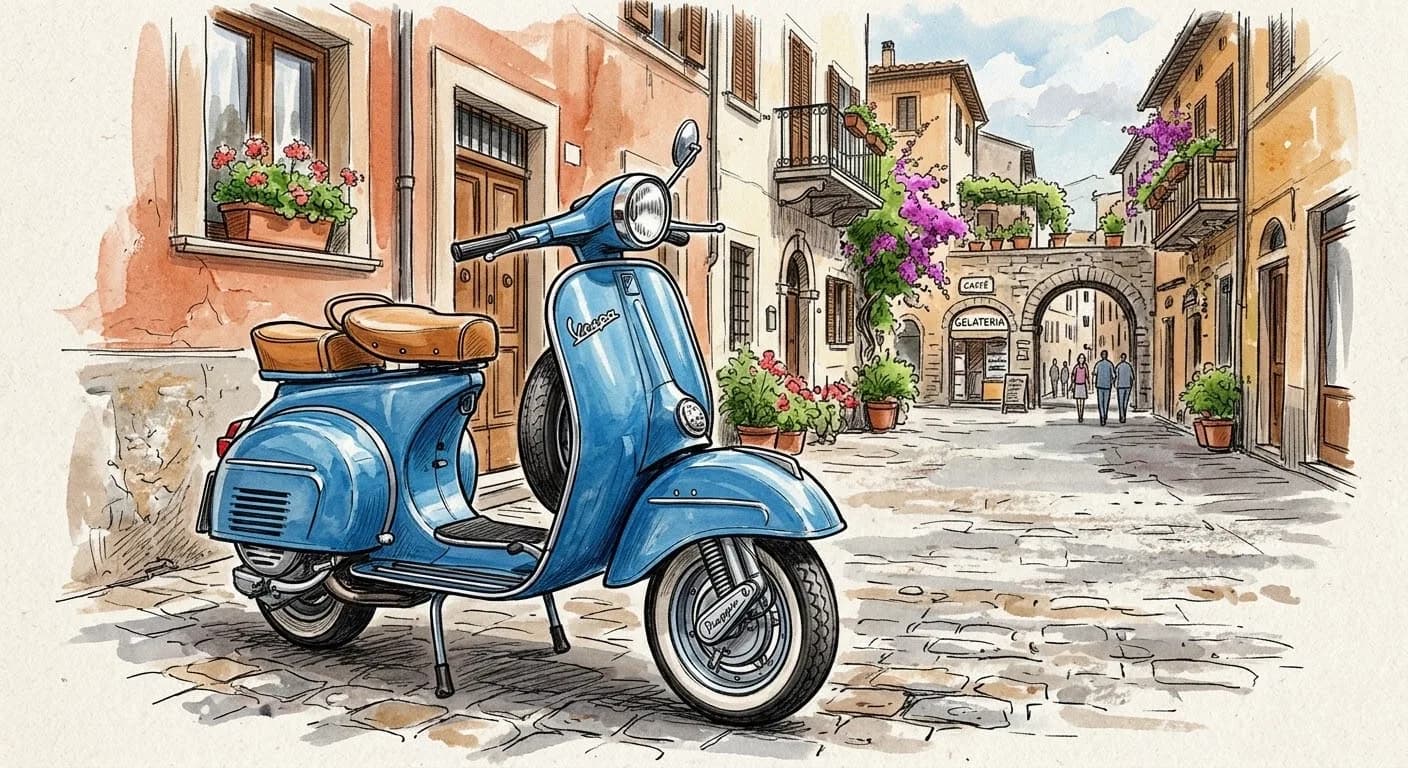
There was a time when a particular mode of transport became an inseparable part of the childhood, youth and urban memories of several generations. It gave the city’s culture, social life and lifestyle a distinctive identity. Among the most prominent names of that era was the Italian scooter, Vespa.
There was a time when a Vespa cruising along Karachi’s roads, with its rear-mounted spare tyre, curved metal body, distinctive engine sound and attractive design, would invariably catch people’s attention. It was not merely a means of transportation; it was a necessity for the middle class, a passion for young people and a symbol of prestige for well-off families.
If one recalls Karachi in the 1960s and 1970s, Vespa scooters were a familiar sight on Bandar Road, Saddar, M.A. Jinnah Road, Clifton, Nazimabad and other parts of the city. Government employees, teachers, businessmen, students and young people could frequently be seen riding them. In some households, a Vespa was practically a family vehicle. Fathers would use it to drop their children at school and, in the evenings, take their families out for a ride around the city.
A dear friend of my late father, Shah Khalilullah Junaidi, Mr Zubair Ahmed, whom we all affectionately called Zubair Chacha, taught at Zia-ul-Uloom School in Nazimabad and lived in Orangi Abad Quarters, Nazimabad. He would often visit our home on his Vespa scooter. His arrival would fill us children with excitement. His scooter, parked outside our house, was a special attraction for us. We would eagerly climb onto it, hold its handlebars and imagine ourselves to be expert riders. Even today, that scene remains preserved among my fondest childhood memories.
Vespa occupies a distinct place in Karachi’s cultural and social history. It belonged to an era when the roads were not as congested as they are today. Traffic was relatively light, and bicycles, scooters and a limited number of cars were an integral part of everyday urban life. The distinctive sound of a Vespa could often be heard from a distance, allowing us to recognise that someone familiar was passing by.
Time passed, childhood gave way to youth, and I entered college. Another memory associated with Vespa became part of my life. My friend Irfan’s elder brother, Islamuddin Bhai, also owned a Vespa scooter. Not only would he take us out for rides, but it was on that very scooter that Irfan and I learned how to ride one ourselves.
Some possessions become far more than material objects; they turn into an emotional treasure trove of memories. For me, the Vespa is one such cherished memory.
The Vespa scooter was introduced in 1946 by the Italian company Piaggio in the aftermath of the Second World War. Its design was created by engineer Corradino D’Ascanio. The word ‘Vespa’ means ‘wasp’ in Italian. A wasp is a flying, stinging insect with a characteristically narrow waist, somewhat resembling a honeybee but generally known for its more aggressive nature.
Its distinctive design, comfortable seating and pressed-steel body, which offered riders a degree of protection from dust and road debris, helped make Vespa popular across the world.
Khwaja Autos played an important role in introducing Vespa to Pakistan and establishing its market in the country. Through its association with Italian manufacturer Piaggio, Khwaja Autos contributed to the scooter’s popularity among Pakistani consumers through its importation, sales and local marketing. The name Khwaja Autos therefore holds particular significance in Pakistan’s automotive history.
Akbar Road, in particular, was renowned for its motorcycle and scooter markets, spare-parts shops and mechanics. For Vespa enthusiasts, the area became a hub where buying and selling old scooters, getting them repaired and finding spare parts was relatively convenient.
During the early years of Pakistan’s automotive industry, importing components and assembling semi-finished units locally was a common practice. Besides Khwaja Autos, references can also be found to Raja Auto Cars, which was involved in the Vespa scooter and three-wheeler business in 1964.
Elsewhere in the world, Germany’s Zündapp introduced the Bella scooter, while Japan had its own popular models, including Mitsubishi’s Silver Pigeon and the Fuji Rabbit. In India, Lohia Machinery Limited (LML) entered into a partnership with Piaggio to manufacture Vespa-style scooters. Models such as the LML Star and LML NV were subsequently introduced. Nevertheless, Vespa’s classic design remains an important reference point for retro-style scooters worldwide.
An important turning point in Pakistan’s two-wheeler history came during the 1960s, when Atlas Autos Limited entered into a technical collaboration agreement with Japan’s Honda Motor Company. Commercial production began in Karachi in 1965, and various Honda models were introduced in the Pakistani market.
Initially, Honda motorcycles emerged as a relatively new option for Pakistani consumers. However, their lightweight construction, ease of maintenance and suitability for changing commuting requirements gradually made them increasingly popular.
The introduction of the Honda CD70 and CG125 in 1976 marked the beginning of a new chapter in Pakistan’s motorcycle industry. The CD70, in particular, achieved extraordinary popularity because of its fuel efficiency, ease of repair and relatively affordable running costs.
Gradually, motorcycles began replacing scooters. Motorcycles proved more convenient for navigating traffic, manoeuvring through congested roads and finding readily available spare parts. This transition became even more pronounced during the 1990s. Vespa’s popularity began to decline, while motorcycles increasingly became an essential mode of transport for ordinary Pakistanis.
The change was not solely the result of Honda’s arrival. Evolving consumer preferences, fuel economy, purchase prices, maintenance costs and the availability of spare parts were equally important factors behind the transition.
Although the Vespa has almost disappeared from Pakistani roads over time, its charm has never faded. Vintage scooter enthusiasts continue to preserve old Vespas, restore them and make every effort to bring them back to their original glory.
In recent years, Vespa has made a comeback in Pakistan. Through an association with Ravi Automobile Private Limited, modern products have been introduced under the name Vespa Pakistan. Sales, servicing and spare-parts facilities are being provided through authorised 3S (Sales, Service and Spare Parts) dealerships. However, this new arrival cannot be described as a complete revival of the local assembly system that existed in the past.
Today, Karachi’s roads are dominated by Honda CD70s, CG125s and other modern motorcycles. The world of two-wheel transportation has changed dramatically. Yet, for those who witnessed the era of Vespa, its name represents much more than just a scooter. It brings back memories of childhood, youth, friends, relatives and a bygone way of life in the city.
The Vespa once travelled along Karachi’s roads, but its real journey continues to this day in the hearts and memories of the people.
Join the discussion
No comments yet. Be the first to weigh in.
Read next
Related coverage
Lifestyle & Society
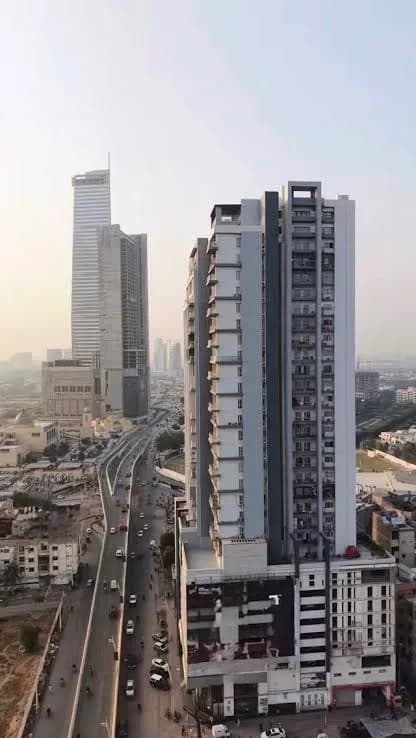
Karachi’s Vertical Expansion Raises Questions Over Rooftop Ownership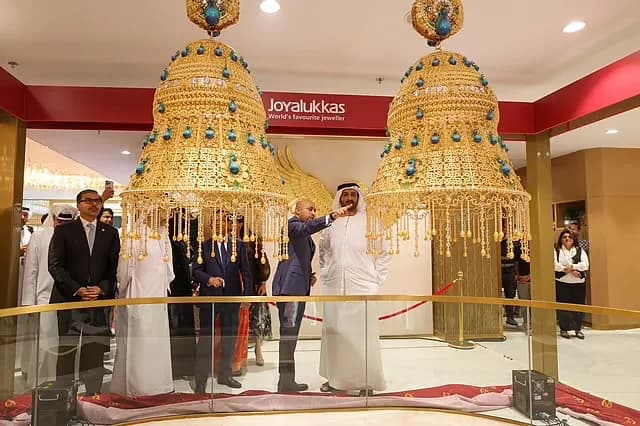
Lifestyle & Society
Giant gold earrings in Dubai win two Guinness World Records titles
Latest
Pakistan
President Zardari Meets Mohsin Naqvi; New Provinces Also DiscussedEXCLUSIVEEducation
Retired Faculty of Federal Urdu University Forced to Approach Courts for Pension Dues; Why Is Federal Education Minister Khalid Maqbool Siddiqui Silent?Pakistan
Has Khalid Maqbool Siddiqui Lost the Chairmanship of MQM-Pakistan?Business
Karachi Police Assures Traders of Full Cooperation in Ensuring Their Security and Resolving Issues: Additional IGPakistan
Senior Journalist Ammar Masood’s Analysis of Federal Health Minister Syed Mustafa Kamal’s Press Conference.
More from Lifestyle & Society