PakistanFeatureAnother timeless story from Karachi’s storyteller, bringing forgotten chapters
Karachi’s Lost Industrial Heritage: The Story of the Dalmia Cement Factory
Dalmia Family’s commercial influence was so extensive that it was considered comparable to major industrial dynasties such as the Tatas and Birlas.
Karachi’s industrial development owes much to the entrepreneurs and industrialists who laid the foundations of various industries in the city before the partition of the Indian subcontinent. Among these prominent figures was Seth Ramkrishna Dalmia, a renowned Indian industrialist who established a major cement factory in Karachi, leaving a significant mark on the city’s industrial history.
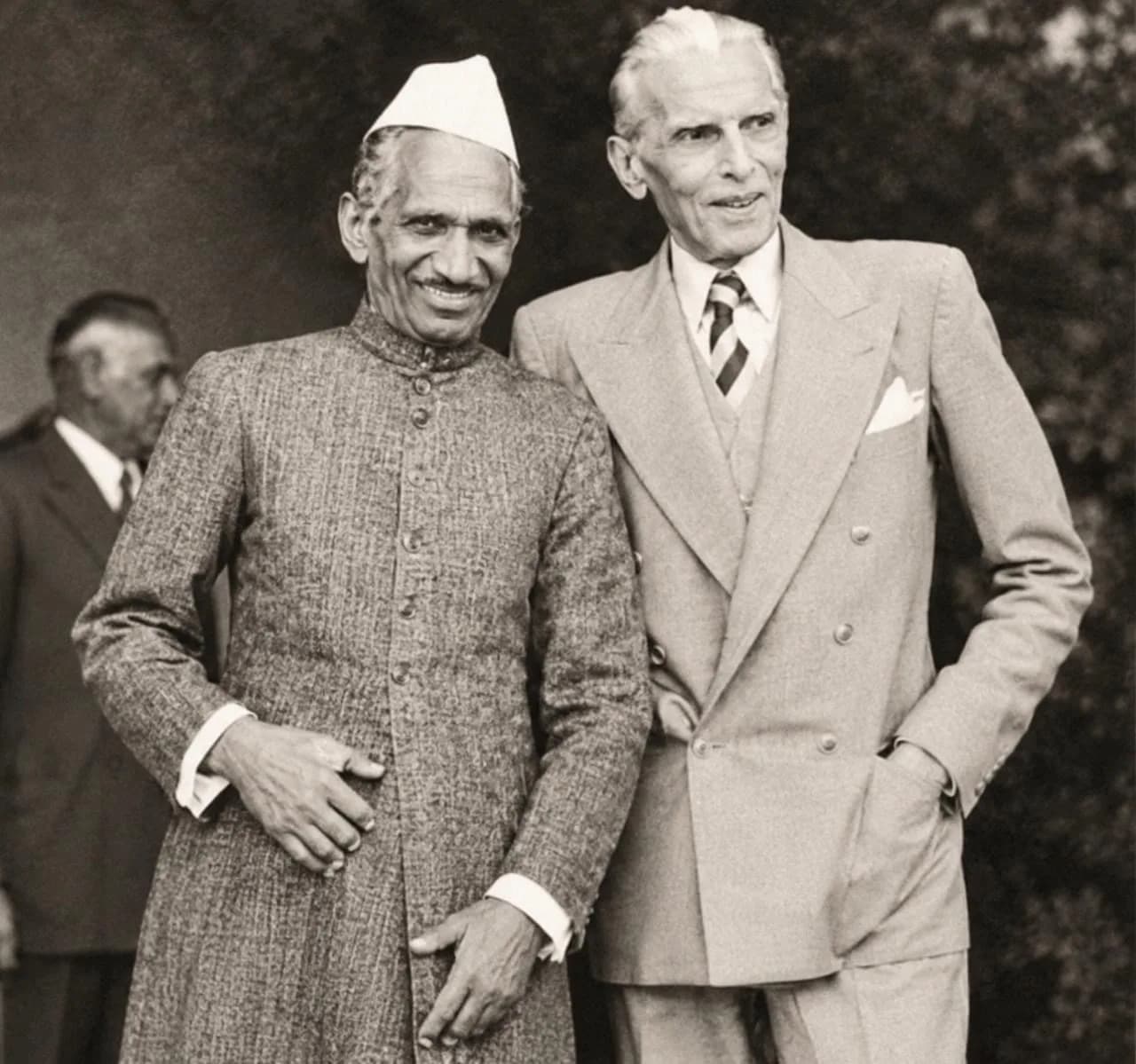
Today, the factory he established has disappeared from the industrial landscape. However, localities such as Dalmia Society and Shanti Nagar continue to preserve its historical legacy. An especially interesting aspect of this story is Ramkrishna Dalmia’s close friendship with the founder of Pakistan, Quaid-e-Azam Muhammad Ali Jinnah. Their association remains a noteworthy reference in the political and social history of the subcontinent.
From a Modest Marwari Family to an Industrial Empire
Seth Ramkrishna Dalmia was born on April 7, 1893, into a poor Marwari family in Rajasthan. He was still young when his father passed away, leaving him with the responsibility of supporting his family at just 18 years of age.
He began his business career trading in gold and silver and speculating on fluctuations in market prices. His exceptional commercial instincts, willingness to take risks and ability to identify profitable opportunities soon transformed him into a successful businessman.
He subsequently expanded his business interests into several sectors. Along with his brother, Jaidayal Dalmia, and son-in-law, Sahu Shanti Prasad Jain, he established the Dalmia Jain industrial and commercial group.
Their business empire expanded into cement, sugar, chemicals, banking, insurance and other industries. Dalmia challenged the dominance of British investors in the cement industry and established factories in different parts of India.
Before the partition of the subcontinent, the Dalmia family ranked among the leading industrial and business houses in the region.
Its commercial influence was so extensive that it was considered comparable to major industrial dynasties such as the Tatas and Birlas.
Friendship with Quaid-e-Azam Muhammad Ali Jinnah
Ramkrishna Dalmia had another dimension to his personality, closely associated with political and social activities. He supported India’s independence movement and provided financial assistance to various political leaders.
He maintained links with prominent personalities, including Mahatma Gandhi, Subhas Chandra Bose and Sardar Vallabhbhai Patel. His connections, however, were not confined to Congress leaders. He also enjoyed a close friendship with Quaid-e-Azam Muhammad Ali Jinnah.
Their relationship is particularly interesting because of their differing political ideologies and religious backgrounds. Despite these differences, personal friendship and mutual trust brought the two men close.
The house at 10 Aurangzeb Road in New Delhi is another historical reminder of their friendship. Quaid-e-Azam purchased the bungalow in 1938, and it remained his property until the creation of Pakistan. Ramkrishna Dalmia subsequently purchased the property from him for Rs1 million.
Dalmia’s daughter, Neelima Dalmia Adhar, confirmed this account in a letter published in The Indian Express on September 1, 2009. She stated that her father was a close friend and confidant of Quaid-e-Azam and had purchased the bungalow directly from him.
According to her, Ramkrishna Dalmia never used the property as his residence. Instead, it served as the headquarters of a movement campaigning against cow slaughter.
The Establishment of Dalmia Cement Factory in Karachi
An important chapter in Ramkrishna Dalmia’s industrial career is directly connected with Karachi.
During British rule, Karachi was rapidly emerging as a major commercial and port city. The construction of new buildings, warehouses, roads and industrial facilities was generating growing demand for construction materials, particularly cement.
According to Karachi’s 1937-38 residential and commercial directory, Sindh Governor Sir Lancelot Graham laid the foundation stone of a major cement factory in Karachi in 1938.
The factory was constructed on the same road leading towards Country Club, a short distance from Sindh Textile Mills. The Dalmia Brothers were investing in the project.
The 1946 Labour Investigation Committee report also confirms the significance of this industrial venture. According to the report, the Karachi factory of Dalmia Cement Limited was established in 1938. It operated using the dry process of cement manufacturing and was among the major factories owned by the Dalmia Group.
Production activities commenced on October 1, 1938. This date is also supported by a judicial decision dated September 23, 1943, which stated that the Karachi factory had opened in June 1938, while regular cement production began on October 1 of that year.
The establishment of the factory created employment opportunities for local residents and generated economic activity in related sectors, including mining, transportation of raw materials, coal supply, packaging and cement distribution.
According to the official 1946 report, approximately 935 employees worked at the factory, including 30 women. In addition, around 200 contract workers were engaged in mining, cement-bag packaging and the transportation of stone and coal.
Thus, more than 1,000 people were directly or indirectly associated with the factory for their livelihoods.
These figures demonstrate the factory’s considerable importance in Karachi’s industrial life before partition.
How Dalmia Society and Shanti Nagar Got Their Names
Following the establishment of the Dalmia Cement Factory, an industrial settlement and residential activities gradually developed around the facility. Over time, the locality became popularly known as Dalmia.
Even today, Dalmia Society in Karachi preserves this historical association.
Shanti Nagar, another locality in the same area, is also believed to have been named after Sahu Shanti Prasad Jain, Ramkrishna Dalmia’s son-in-law.
Interestingly, the area also has an educational history associated with the factory.
The institution now known as Maneck (also spelt Manick) Government Boys Secondary School, located in Shanti Nagar in Gulshan-e-Iqbal, was established in 1933. At the time, it was operating within the factory premises.
Transfer of Ownership from India to Pakistan
One of the most significant and relatively lesser-known aspects of the Dalmia Cement Factory’s history is that its eventual closure was not the result of a sudden accident or a single administrative decision. Rather, it followed a series of political developments, changes in industrial ownership and, eventually, nationalisation.
After the creation of Pakistan, the Karachi Dalmia Cement Factory remained the property of the Indian company, Dalmia Cement Limited.
However, as political and economic circumstances between the two countries evolved, the question of transferring ownership of the business to Pakistan emerged.
On July 24, 1962, a prominent Karachi businessman, Eruch Maneckji, entered into an agreement with Dalmia Cement Limited to purchase both its Karachi and Dandot cement factories, the latter located in Jhelum district.
Several supplementary agreements were subsequently executed, while the parties awaited the necessary government approvals in both countries.
The legal process of the sale was finally completed on September 30, 1964, transferring the two factories to Pakistan Progressive Cement Industries Limited.
The total purchase price was fixed at Rs23,366,678.
This was more than a mere change in the company’s name. It marked a historic transfer of ownership of an important Karachi industrial facility from an Indian business group to a Pakistani company.
Nationalisation and the Decline of the Factory
In 1972, under the Government of Pakistan’s economic reforms and nationalisation measures, Pakistan Progressive Cement Factory was taken over by the state.
Its name was subsequently changed to National Cement Industries Limited, Karachi. Later, the organisation came under the State Cement Corporation of Pakistan.
The National Assembly’s Public Accounts Committee report for 1980-81 provides an account of the company’s history. It states that the company was initially established in 1937 under the name Dalmia Cement Limited, sold its factories to Pakistan Progressive Cement Factory in 1964 and, following nationalisation in 1972, became known as National Cement Industries Limited.
The report also highlighted serious financial and operational problems.
According to the committee, the earnings generated by the Karachi plant were being used to cover the losses incurred by the Dandot factory. Meanwhile, revenue from cement sales had begun falling below production costs.
The machinery had also become outdated, requiring substantial investment in modern equipment.
Over time, the factory’s financial and administrative difficulties continued to grow, eventually bringing its industrial operations to an end.
Dalmia’s Religious and Political Activities
Apart from being a successful industrialist, Ramkrishna Dalmia was also highly active in religious and political affairs.
He was a strong supporter of Hindu religious causes and led a major campaign in India for a complete ban on cow slaughter. For this purpose, he patronised the Anti-Cow Slaughter League.
One unusual aspect of his life, frequently mentioned in accounts of his personal beliefs, was his pledge not to eat wheat, rice or other cereals until a complete ban on cow slaughter was imposed in India. He reportedly maintained this vow until his death.
Following India’s independence, his relationship with Prime Minister Jawaharlal Nehru’s government also became strained.
Dalmia disagreed with Nehru’s economic policies and his position on the Hindu Code Bill. He also used his newspaper, The Times of India, to criticise the Nehru government.
His business affairs subsequently became embroiled in controversies.
During the 1950s, his financial dealings came under investigation. In 1962, a case before the Supreme Court of India involved allegations of unauthorised use of insurance company funds and manipulation of accounts, as well as the issue of his conviction. This legal crisis dealt a serious blow to his extensive business empire.
Ramkrishna Dalmia married six times and had 17 children.
His daughter, Neelima Dalmia Adhar, authored a book about his life and business activities titled Father Dearest: The Life and Times of R.K. Dalmia. The book provides an important account of his personality, family life, political connections and the rise and decline of his business empire.
Ramkrishna Dalmia died in 1978 at the age of 85.
A Forgotten Chapter of Karachi’s Industrial History
As people travel through Karachi’s Dalmia locality today, very few probably realise that a major cement factory once operated here, employing hundreds of workers and contributing to the city’s construction requirements.
The factory’s machinery has long fallen silent, and its industrial activities have become part of history. Yet the residential settlements that grew around it continue to exist.
Dalmia Society and Shanti Nagar are not merely residential localities; they are also reminders of Karachi’s industrial past, when new factories were being established and employment opportunities were expanding.
Ramkrishna Dalmia’s friendship with Quaid-e-Azam, the establishment of his cement factory in Karachi, the subsequent transfer of its ownership to Pakistan and its eventual nationalisation and decline together represent an important but largely forgotten chapter of the city’s history.
Preserving these stories is essential to understanding Karachi’s evolution as one of the subcontinent’s major commercial and industrial centres.
Read next
Related coverage
ExclusiveInvestigations
Liaquat Ali Khan’s Assassination: Begum Rana Liaquat Alleges Ghulam Muhammad and Mushtaq Gurmani Were Involved
Pakistan
President Zardari Meets Mohsin Naqvi; New Provinces Also Discussed
Pakistan
Has Khalid Maqbool Siddiqui Lost the Chairmanship of MQM-Pakistan?
Pakistan
Senior Journalist Ammar Masood’s Analysis of Federal Health Minister Syed Mustafa Kamal’s Press Conference.
Latest
Lifestyle & Society
The Vespa Scooter: A Ride, a Journey Through an EraPakistan
President Zardari Meets Mohsin Naqvi; New Provinces Also DiscussedEXCLUSIVEEducation
Retired Faculty of Federal Urdu University Forced to Approach Courts for Pension Dues; Why Is Federal Education Minister Khalid Maqbool Siddiqui Silent?Pakistan
Has Khalid Maqbool Siddiqui Lost the Chairmanship of MQM-Pakistan?Business
Karachi Police Assures Traders of Full Cooperation in Ensuring Their Security and Resolving Issues: Additional IG
More from Pakistan