Opinion & AnalysisOpinion
Karachi’s Changing Face: Crisis, Indifference and Inequality
A conversation about Karachi’s changing conditions opens a wider examination of civic failure, addiction, crime, unequal enforcement and a growing indifference to the suffering around us.
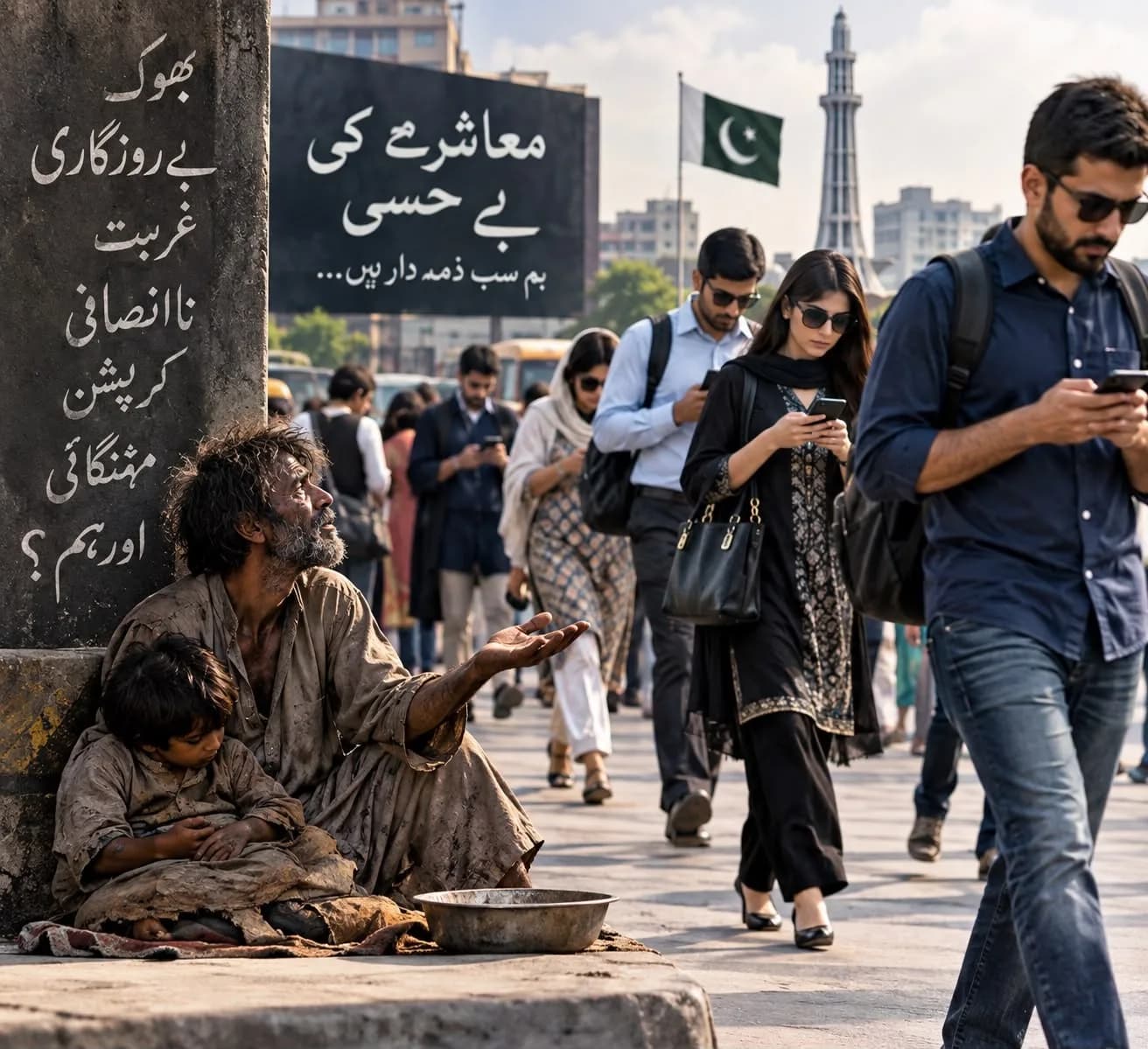
Over the past few days, a conversation took place with friends Shezan Khan, Saleemullah Siddiqui and Imran Ahmed, beginning with a discussion about Karachi’s changing conditions, the behaviour of government institutions toward citizens, and the growing indifference in society. What started as a conversation about Karachi quickly expanded into a discussion of the country’s overall situation, public difficulties and the state of the present system. Different aspects came under discussion, and each person expressed his views on the current situation in light of his own observations and experiences.
Shezan Khan said that today there is hardly any section of society that is not facing some kind of difficulty, deprivation or anxiety. Inflation has broken the back of the ordinary person, unemployment has tied the hands of young people, civic problems have made urban life painful, and the indifference of government institutions has created a feeling among people that there is no one to listen to their grievances.
Taking the discussion further, Saleemullah Siddiqui and Imran Ahmed also drew attention to the fact that civic problems are no longer merely administrative in nature. Their effects are now clearly visible in social attitudes, mental well-being and mutual tolerance. Today, everyone is blaming someone else. Citizens blame the government, the government blames the federation, the federation blames the province, the province blames institutions, and institutions blame a lack of resources. But where does the ordinary citizen stand amid all this blame? He is trying to live his everyday life while dealing with problems of electricity, water, transport, inflation, education, healthcare, employment and law and order.
When we look at a city like Karachi, this crisis becomes even more visible. On one side are high-rise buildings, large shopping malls, people shopping in them, expensive cars and wide roads. On the other are people sleeping on footpaths, children searching for food in piles of garbage, people struggling with drug addiction, and settlements deprived of basic facilities. The two contrasting faces of life stand side by side in the same city.
One aspect of the discussion about people struggling with drug addiction was particularly worth considering. It was felt that some people living on the margins of society now appear to be beyond even the fear of the law. People can be seen openly using drugs in the city’s underpasses, beneath bridges, along roadsides and on footpaths. In some places, incidents involving people picking objects from garbage and committing theft have also become a persistent problem for citizens.
Theft, damaging public or private property, or creating a danger for citizens cannot be accepted under any circumstances. But another question must also be asked: how did a person who has almost lost his life, health and social relationships reach this point? If drugs are easily available in a city, employment opportunities are limited, treatment and rehabilitation centres are inadequate, and the law is not applied equally, then the issue cannot remain simply a matter of the “drug addict.” Society as a whole cannot distance itself from responsibility for this crisis.