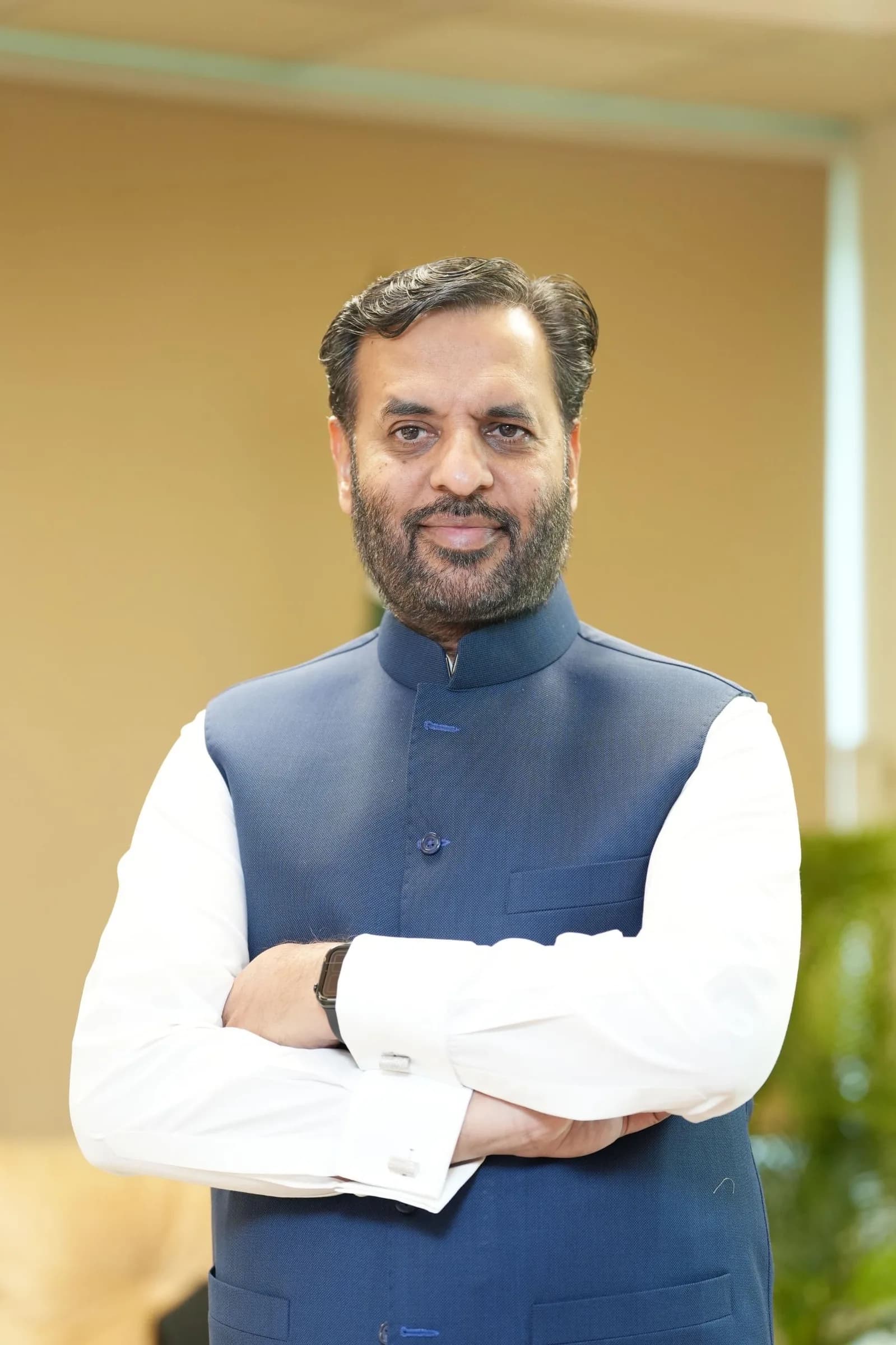
SPECIAL REPORTPakistanInvestigationWhy Is Mustafa Kamal the Only MQM Leader Being Singled Out?
Negative Campaign Against Mustafa Kamal: What Are the Factors Behind It?
Social media has become an effective tool for political confrontation today. Spreading allegations, unreliable news, unverified claims and identical messages through multiple accounts to create a particular perception about a political personality has become an increasingly common practice.
It would perhaps be incorrect to view the ongoing social media campaign against Federal Health Minister Syed Mustafa Kamal merely as an administrative or accountability issue. Several political, administrative and organisational factors appear to be at play behind this campaign. On the one hand, allegations of irregularities in the procurement of vaccines for Hajj and Umrah pilgrims are being portrayed as a multi-billion-rupee scandal. On the other, demands for new provinces and administrative units, crackdowns on counterfeit medicines, and internal differences within Muttahida Qaumi Movement-Pakistan (MQM-P) make it necessary to examine the entire situation in a much broader context.
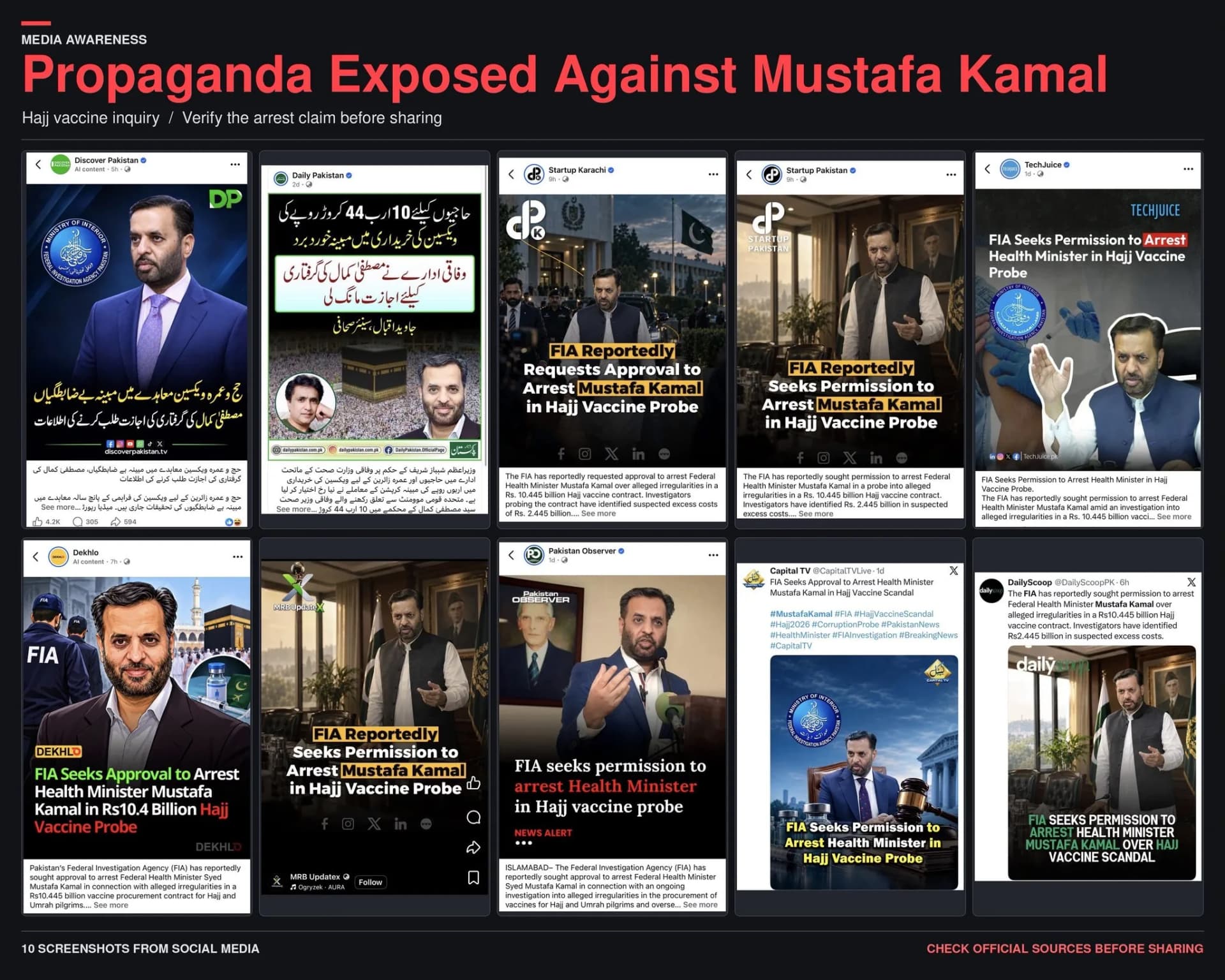
The FIA’s investigation into the procurement of vaccines for Hajj and Umrah pilgrims is being portrayed by certain quarters as a scandal involving the alleged misappropriation of Rs10 billion.
The fact, however, is that when the tender being cited as the basis of this scandal was issued, Mustafa Kamal was neither aware of it nor had any instructions been issued under his signatures for its issuance. The investigation concerns an amount of approximately Rs180 million, which is being exaggerated and presented as a Rs10 billion embezzlement scandal, turning a relatively limited matter into a sensational controversy. Speculation about someone’s personal desire to see an arrest is also being presented as news. Moreover, the amount allegedly misappropriated is still available in the national exchequer, while the inquiry report has already been submitted to the Prime Minister.
Mustafa Kamal’s performance also includes the revival of a hospital established through Pakistan-China cooperation, which had remained non-functional for years. This is among his notable initiatives. The Prime Minister also praised Mustafa Kamal upon the completion of this project, saying: “The Federal Minister has turned my dream into reality.”
In addition, action against counterfeit and unregistered medicines, along with the introduction of a barcode system on pharmaceutical packaging, is being regarded as an important initiative.
The introduction of greater transparency in the pharmaceutical sector, product identification and supply-chain monitoring has become a major challenge for those involved in illegal businesses. The mafia associated with the manufacturing and sale of counterfeit medicines now faces increased scrutiny, and these elements are allegedly fuelling the campaign against Mustafa Kamal.
The most significant political dimension of the campaign against Mustafa Kamal is the demand for the creation of new provinces and administrative units.
Mustafa Kamal has consistently and forcefully advocated this demand, presenting arguments and raising his voice regardless of political considerations. Not only his supporters but also his political opponents recognise him as an organised and influential voice on this issue. At the same time, his demand has caused considerable concern among opposing political forces.
The question of administrative powers, resource distribution, local government autonomy and the restructuring of the administrative system in Karachi and other urban areas of Sindh has remained a source of political disagreement for decades. Karachi, the country’s economic hub, has arguably borne the greatest consequences of this prolonged administrative and political uncertainty.
In such circumstances, allegations against Mustafa Kamal and what is being described as a paid social media campaign appear to be an attempt to divert attention from the demand for administrative units and embroil him in other controversies.
In the past, Mustafa Kamal’s political opponents also demanded his resignation following the fire incident at PIMS Hospital. However, without waiting for anyone to demand his resignation or exert pressure on him, Mustafa Kamal submitted his resignation to the Prime Minister within approximately an hour of the incident. This demonstrated that he regarded his ministerial responsibility not merely as a position of authority but as a matter of accountability.
By contrast, following the Gul Plaza tragedy, the minister, the mayor and various departments of the Sindh government reportedly received a clean chit despite the judicial commission. Yet even after that incident, the social media campaign against Mustafa Kamal continued. Today, a similar campaign is being conducted against him over the vaccine procurement issue.
Another important dimension of the campaign against Mustafa Kamal relates to internal differences within MQM-Pakistan.
In 2023, Mustafa Kamal and Anis Kaimkhani’s Pak Sarzameen Party (PSP) merged with MQM-Pakistan. Following the merger, different factions with varying political and organisational approaches came together on a single platform.
Certain elements within the party are still unwilling to accept Mustafa Kamal and Anis Kaimkhani. According to this perspective, these elements want to run MQM in the traditional manner that prevailed before August 22, 2016.
Mustafa Kamal’s persistent demand for intra-party elections is another major source of disagreement. Despite the Election Commission’s directives, the party election process remains pending, and differences reportedly exist between Mustafa Kamal and the incumbent party chairman, Khalid Maqbool Siddiqui, over this issue.
This situation gives rise to the perception that opposition to Mustafa Kamal is not limited to rival political forces; certain elements within his own party are also uncomfortable with his growing political influence.
It is also significant that some of Mustafa Kamal’s opponents within the party are so deeply divided among themselves that they cannot even stand the sight of one another. Yet they appear to have formed a common front against him. It is also a political reality that both his opponents and MQM-London would benefit from a weakened MQM-Pakistan.
In 2013, Mustafa Kamal walked away from his Senate seat, openly revolted against Altaf Hussain and left the country. He returned to Karachi on March 3, 2016, and publicly declared Altaf Hussain an enemy of the state, presenting evidence of his alleged anti-state activities. At that time, Altaf Hussain still had members in the provincial and National Assemblies, while MQM also held the offices of mayor and governor.
Mustafa Kamal and Anis Kaimkhani’s courage was dismissed by some as recklessness. The reason was that, at the time, rebelling against Altaf Hussain carried potentially fatal consequences, with death being considered the minimum possible punishment by those familiar with the prevailing circumstances.
By breaking away from Altaf Hussain’s politics, they challenged what were alleged to be MQM’s links with India’s intelligence agency, RAW, and helped dismantle its alleged network in urban areas. Certain elements associated with MQM-London, which remain aggrieved by the collapse of that network, are also attempting to benefit from the ongoing campaign against Mustafa Kamal. From their perspective, a weakened and internally divided MQM-Pakistan is what would help keep MQM-London politically relevant.
Social media has now become an effective instrument of political confrontation. The dissemination of allegations, unverified reports, unsubstantiated claims and identical messages through multiple accounts has increasingly become a means of creating and promoting a particular narrative against political personalities.
While examining the allegations and the social media campaign against Mustafa Kamal, it is essential to distinguish between two separate matters.
If any irregularities occurred in the procurement of vaccines, they must be investigated impartially, and those responsible must be identified, regardless of their political affiliations or administrative positions. Similarly, measures against counterfeit medicines and initiatives such as the barcode system should be evaluated independently of political differences.
However, if a minister is declared guilty before the facts of an investigation have been established, financial figures are exaggerated and presented without verification, and a one-sided paid social media campaign is conducted against him, the exercise creates the impression of character assassination rather than accountability.
Such practices warrant action under the Prevention of Electronic Crimes Act (PECA), in accordance with the law and due process.
Join the discussion
No comments yet. Be the first to weigh in.
Read next
Related coverage
Pakistan
Has Khalid Maqbool Siddiqui Lost the Chairmanship of MQM-Pakistan?
Pakistan
Senior Journalist Ammar Masood’s Analysis of Federal Health Minister Syed Mustafa Kamal’s Press Conference.
Pakistan
Border Health Services Responsible for Irregularities in Vaccine Procurement, Inquiry Report Reveals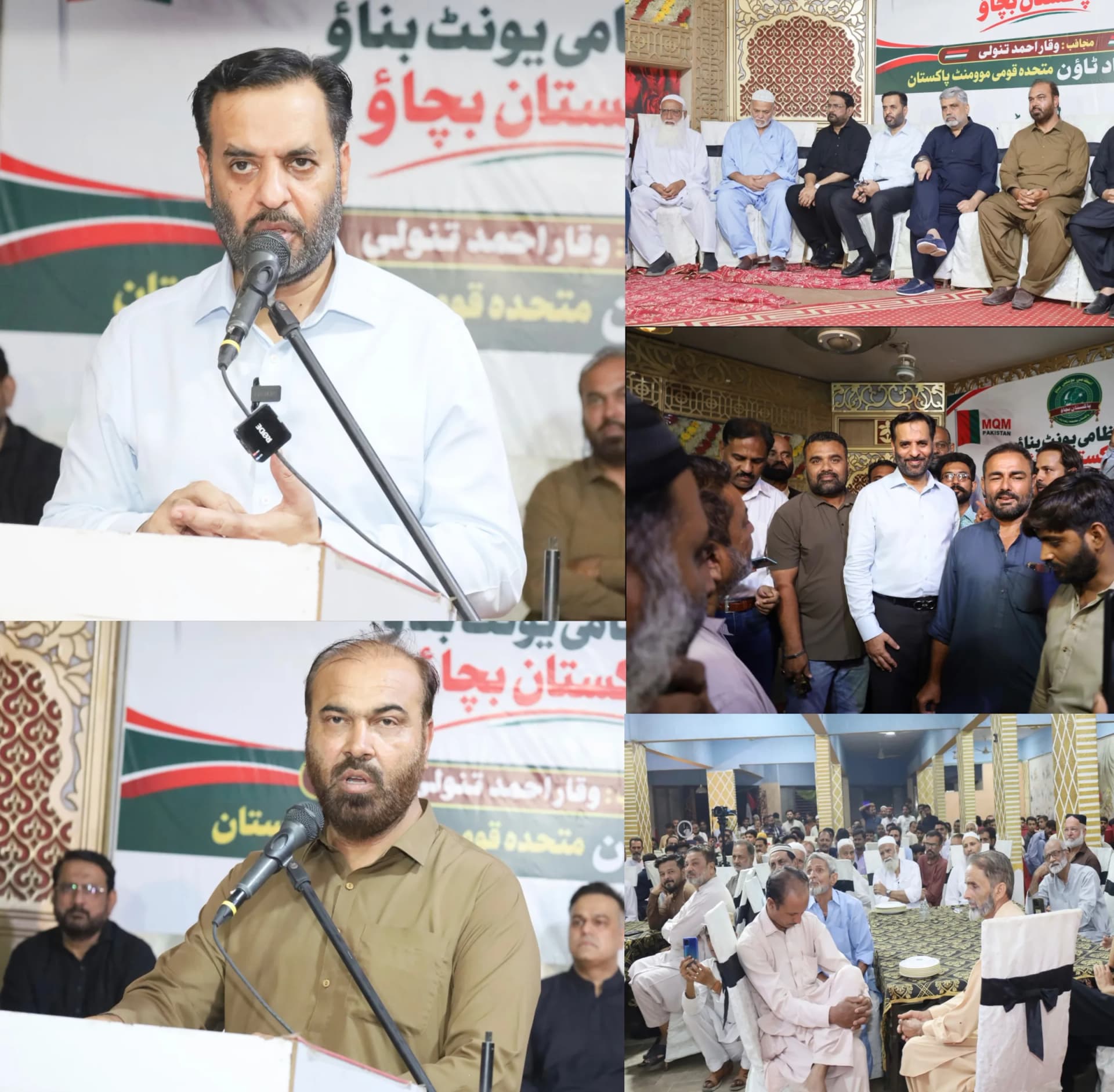
Pakistan
Mustafa Kamal Addresses Gathering as Azam Basti’s Pashtun Community Backs New Administrative Units
Latest
Lifestyle & Society
The Vespa Scooter: A Ride, a Journey Through an EraEXCLUSIVEEducation
Retired Faculty of Federal Urdu University Forced to Approach Courts for Pension Dues; Why Is Federal Education Minister Khalid Maqbool Siddiqui Silent?Pakistan
Has Khalid Maqbool Siddiqui Lost the Chairmanship of MQM-Pakistan?Business
Karachi Police Assures Traders of Full Cooperation in Ensuring Their Security and Resolving Issues: Additional IGPakistan
Senior Journalist Ammar Masood’s Analysis of Federal Health Minister Syed Mustafa Kamal’s Press Conference.
More from Pakistan