PakistanFeatureFrom Glory to Decline: The Story of Muhammadi House
Muhammadi House: Karachi’s First Tallest Building, Once Known as Pakistan’s First Skyscraper
The historic ten-storey building on I.I. Chundrigar Road was once Pakistan’s tallest structure and a major centre of commercial activity. Today, the building, now under government ownership, stands as a fading reminder of its glorious past.

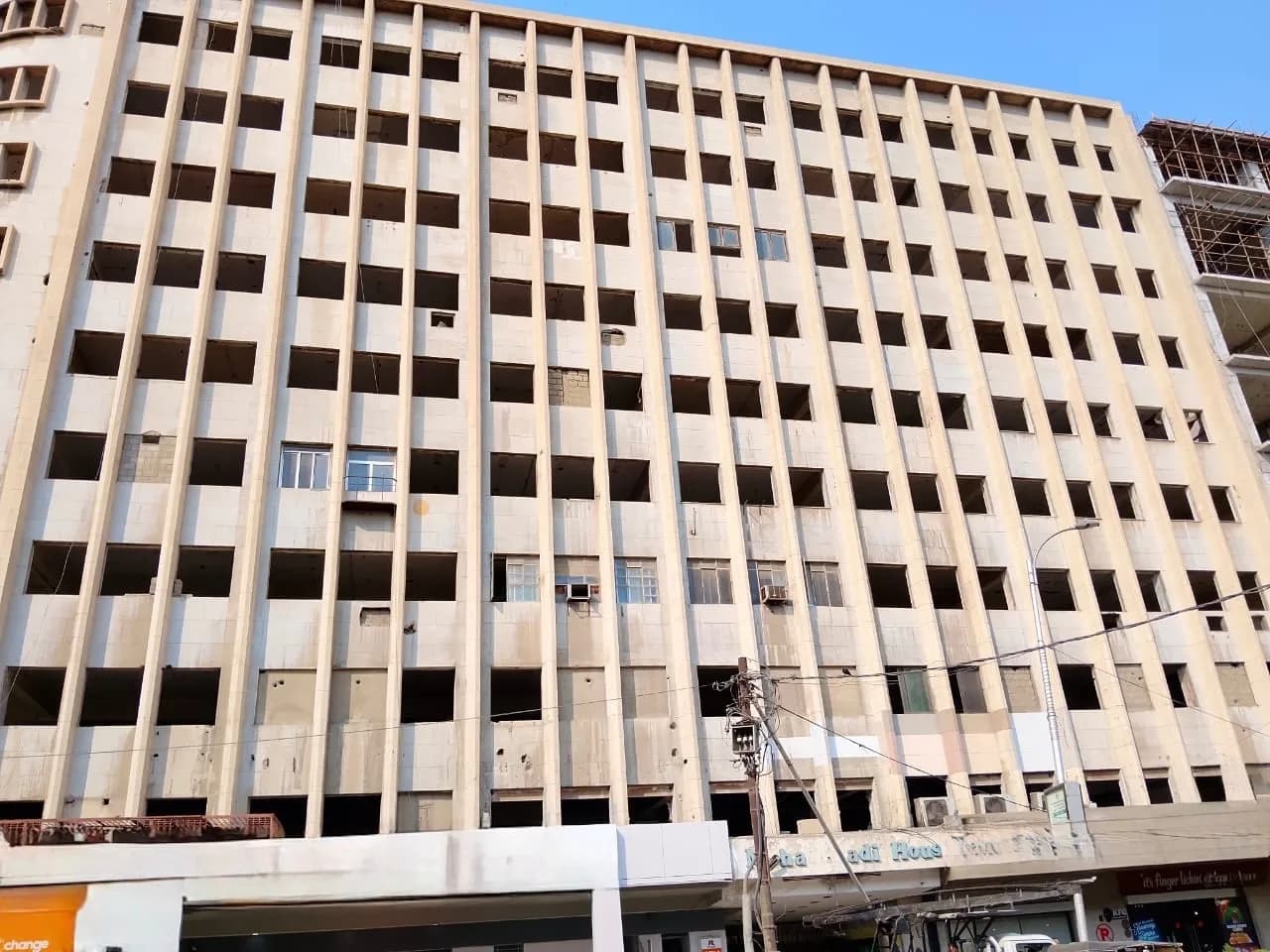
If you travel along Karachi’s Wall Street, I.I. Chundrigar Road, from Tower towards Habib Bank Plaza, you will notice an old, seemingly deserted ten-storey building, located two buildings before the iconic Habib Bank Plaza. Its exterior paint has peeled off, its windows are missing, and most of its floors appear unoccupied. The presence of a few security guards suggests that the property remains under official supervision.
A private bank, a well-known food chain and a few offices continue to operate on the ground floor, but the overall condition of the building is a far cry from the grandeur it once represented.
This is Muhammadi House, regarded as one of the earliest and tallest buildings constructed in Karachi after the creation of Pakistan. There was a time when it held the distinction of being the tallest building in the country and symbolised the rapid commercial and economic growth of the city.
Karachi’s Commercial Growth and the Beginning of High-Rise Buildings
Before the creation of Pakistan, most buildings in Karachi consisted of two or three floors. The city’s importance was primarily linked to its seaport, maritime trade and commercial activities. However, after Pakistan came into existence in 1947 and Karachi became the federal capital, its economic and administrative significance increased considerably.
Muslim business families from various commercial centres of the subcontinent migrated to Karachi. They began investing in industry, trade, banking and shipping. As a result, Karachi rapidly emerged as the country’s most important commercial hub.
Located close to the port, McLeod Road, now known as I.I. Chundrigar Road, gradually developed into a centre for banks, shipping companies and major commercial enterprises. It was against this backdrop of economic transformation that the idea of constructing the city’s first major high-rise building emerged.
The Willika Family’s Ambitious Project
In 1952, the renowned Pakistani business and industrial group, the Willika family, announced plans to construct a building on I.I. Chundrigar Road that would be unprecedented in height in the country at the time.
The Willika family was among Pakistan’s early industrial and business dynasties. In addition to its industrial and commercial interests, the family was also involved in the shipping business. The building, constructed for Muhammadi Steamship Company Limited, reflected the group’s expanding business interests and confidence in Pakistan’s emerging economy.
The announcement of plans to construct Pakistan’s tallest building attracted considerable attention from the print media. Newspapers regularly carried reports about the progress of the construction project.
Electric Elevators Imported from the Netherlands
Construction of Muhammadi House began in 1952, and the project was completed approximately five years later, in 1957.
The installation of elevators during construction also attracted considerable public attention. In 1956, when the building was nearing completion, newspapers reported that two electric elevators had been imported from the Netherlands to transport people to the upper floors.
These were Schindler elevators, each capable of accommodating ten passengers at a time. Such facilities were considered a remarkable development in Karachi’s construction industry during that era. Plans were also reported for the installation of four additional elevators.
The ten-storey Muhammadi House represented a major architectural achievement for its time. According to available records, the building covers an area of 2,786 square yards.
A 2020 survey reportedly measured the height up to the roof at approximately 113 feet, while the staircase tower reached around 125.5 feet. This puts the building’s overall height at approximately 38 metres.
Headquarters of Muhammadi Steamship Company
The historical significance of Muhammadi House extends beyond its height. It is closely associated with the early development of Pakistan’s shipping industry.
Muhammadi Steamship Company Limited was established in 1947 and was among the country’s early indigenous shipping companies. It played a role in the development of maritime trade in Pakistan.
Muhammadi House served as the company’s head office, where its administrative and commercial operations were conducted. In this respect, the building was not merely a commercial property but also an important part of the history of Pakistan’s early maritime trade and private-sector enterprise.
The Willika Group was also expanding its industrial and commercial activities during this period. Muhammadi House became a prominent symbol of that economic progress and the confidence of private investors in the newly established country.
Habib Bank Plaza Takes Over the Title of Pakistan’s Tallest Building
Muhammadi House did not retain its position as Pakistan’s tallest building for long. The construction of Habib Bank Plaza in the 1960s brought a new dimension to Karachi’s architectural landscape.
Habib Bank Plaza surpassed Muhammadi House in height and subsequently acquired the distinction of being the tallest building in Pakistan. Its construction marked the beginning of a new era of high-rise development in Karachi.
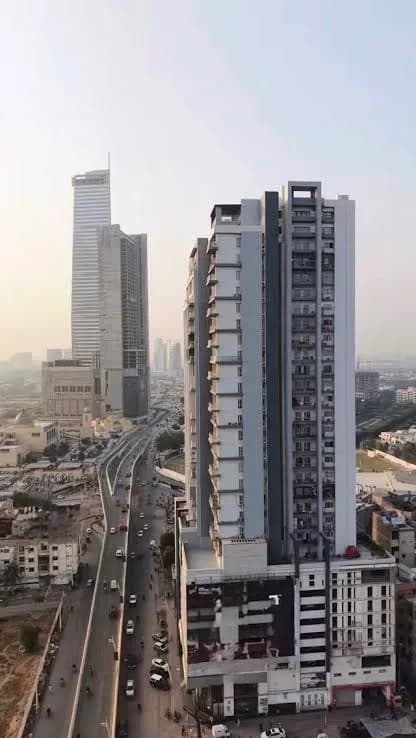
Today, the towering buildings along I.I. Chundrigar Road and its surrounding areas reflect the city’s changing economic and architectural landscape. Nevertheless, Muhammadi House retains its historical significance as one of the pioneering structures that helped introduce a new era of high-rise construction in Karachi.
Nationalisation and the Changing Fate of the Building
An important turning point in the history of Muhammadi House came on January 1, 1974, when the government of Pakistan took control of shipping companies under its nationalisation policy for the maritime sector.
Muhammadi Steamship Company was also brought under government control, and Muhammadi House subsequently became part of the state-owned property portfolio.
Over time, the building gradually lost its commercial significance. The place that once housed the headquarters of a major shipping company and represented the country’s growing business sector now has most of its floors lying vacant and has lost much of its former vibrancy.
A Historic Landmark Awaiting Preservation
Looking at the present condition of Muhammadi House, it may be difficult for younger generations to imagine that this very building once held the distinction of being Pakistan’s tallest structure.
Its deteriorating exterior, missing windows and deserted floors raise important questions about the preservation of a significant chapter in Karachi’s architectural history.
The preservation of historic buildings in Karachi is frequently discussed, but landmarks such as Muhammadi House deserve more than verbal commitments. Their historical significance needs to be formally recognised, their structural condition assessed and practical measures taken to ensure their preservation.
Muhammadi House is more than a ten-storey structure made of bricks, cement and steel. It is a reminder of an era when a newly established country was striving to build its economic identity, Karachi was emerging as its commercial lifeline, and the construction of high-rise buildings was ushering in a new architectural age.
The building still stands on I.I. Chundrigar Road, but its silence tells the story of a glorious chapter in Karachi’s past — a chapter that deserves not to be forgotten.
Join the discussion
No comments yet. Be the first to weigh in.
Read next
Related coverage

ExclusiveInvestigations
October 1959: When Cycle Rickshaws Were Banned in Karachi
ExclusiveInvestigations
Liaquat Ali Khan’s Assassination: Begum Rana Liaquat Alleges Ghulam Muhammad and Mushtaq Gurmani Were Involved
Pakistan
President Zardari Meets Mohsin Naqvi; New Provinces Also Discussed
Pakistan
Has Khalid Maqbool Siddiqui Lost the Chairmanship of MQM-Pakistan?
Latest
Health
Progress in Polio Eradication Is Meaningless Until Virus Is Completely Eliminated: Syed Mustafa KamalCrime
Mir Raza Case: Former Gulistan-e-Jauhar SHO Kamran Qureshi Dismissed from ServiceLifestyle & Society
The Vespa Scooter: A Ride, a Journey Through an EraPakistan
President Zardari Meets Mohsin Naqvi; New Provinces Also DiscussedEXCLUSIVEEducation
Retired Faculty of Federal Urdu University Forced to Approach Courts for Pension Dues; Why Is Federal Education Minister Khalid Maqbool Siddiqui Silent?
More from Pakistan